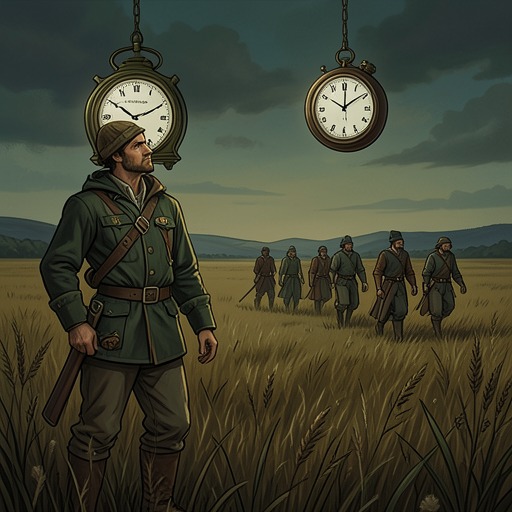
Egyptian enslavement and enslaving mentality
Don't Leave God Alone: How to Get God's Attention, Remain in His Presence, and Even Change His Mind to Make a Difference in Your WorldThe spirit of Pharaoh is the book’s name for the slave mentality produced by prolonged domination and carried forward even after physical captivity has ended. It explains why people who have been released may still expect defeat: Egypt remains active as an internal pattern of fear, limitation, and dependence. In the account of Moses and the Israelites, this mentality threatens to keep a liberated people facing backward, even when God has opened a way toward the Promised Land.
Definition and Historical Background
The concept is rooted in the Israelites’ four hundred years of slavery in Egypt. After Pharaoh finally permitted them to leave, Moses led millions toward freedom, but Pharaoh and his army pursued them to the Red Sea. The people stood between an army behind them and an apparently impassable sea before them, making liberation look temporary and escape seem impossible. Their physical emancipation therefore did not immediately produce an inward sense of freedom.
The book interprets this condition as a mindset formed by long submission. The Israelites had spent so long under a taskmaster that slavery had become the only social reality they knew. They had learned how to be controlled, rather than how to exercise authority. The resulting consciousness made them expect to be overcome by their former captors and helped explain why they were afraid even after leaving Egypt.
How the Mindset Operates
The spirit of Pharaoh first keeps people feeling bound. Pharaoh is presented as a taskmaster whose control and manipulation produce fear and a continuing sense of captivity. Release may have occurred externally, yet the person still behaves as if an old master retains the right to command the present.
Second, it aborts destiny. The book connects Pharaoh’s mass killing of children with an attempt to destroy the future before it can mature. In this interpretation, intimidation does not merely create present discomfort; it seeks to prevent a God-ordained future from ever becoming visible or attainable.
Third, the mindset produces a small view of the self. In Egypt, the Israelites saw themselves as lesser than the Egyptians and as worthless victims. That diminished self-image makes a person interpret obstacles as proof of personal inadequacy rather than as circumstances that can be confronted through God’s power.
Fourth, it hardens the heart. Pharaoh repeatedly hardened his own heart against God, and the book says the Israelites carried a similar hard-hearted rebellion out of Egypt. Bondage thus appears not only as fear but also as resistance: a person can remain attached to the attitudes formed under oppression even while seeking deliverance from oppression itself.
Fifth, the mindset keeps people controlled by money and possessions. Goshen is described as a place where the Israelites had provision under Pharaoh’s control, leaving them indebted and making everything they possessed effectively subject to him. Material security therefore becomes another instrument of dependence rather than evidence of genuine freedom.
Sixth, it chases and intimidates. Pharaoh’s pursuit in the wilderness made the Israelites believe they could never escape their past. The pursuing army became a picture of former bondage returning as a threat, urging people to retreat from freedom and convincing them that overcoming the past is impossible.
The Red Sea Test and the Call to Move
The Red Sea scene provides the concept’s central dramatic test. Moses cried to the Lord for help, but God told him to stop crying out, command the people to move, pick up his staff, raise his hand over the sea, and divide the water so the Israelites could cross on dry ground. The response is not treated as divine indifference. Instead, it calls Moses to act on the confidence he had already declared when he told the people that God would fight for them.
The distinction between desperate crying and expectant action is crucial. The book says God wanted Moses to move forward rather than stand still in fear. The army behind Israel represented the past, while the sea before them represented the obstacle blocking the future. Remaining camped at the obstacle would leave them vulnerable to the pursuing enemy; advancing in faith would create the setting for divine intervention.
Moses’ rod becomes the concrete sign of authority. The same rod had previously become a serpent before Pharaoh and had been associated with signs that intimidated Pharaoh into releasing the people. God therefore directed Moses to use an authority already placed in his hands. Applied to believers, the rod becomes God’s Word of promise spoken with confidence: an instrument for confronting mountains instead of merely describing their size.
Recognition and Deliverance
The book argues that deliverance begins when the hidden pattern is exposed. People must acknowledge how the spirit of Pharaoh keeps them bound, aborts their future, diminishes their identity, hardens their hearts, controls them through possessions, and drives them backward through intimidation. Once those operations are recognized, they can be addressed confidently in the grace of God rather than accepted as permanent features of life.
This teaching is connected with several contemporary examples of persistent prayer. After the September 11 attacks, churches and prayer meetings filled as people sought God in confusion and danger, but the renewed dependence lasted only briefly. The episode illustrates a related form of bondage: turning to God only during crisis while refusing regular commitment. The book treats that pattern as risky because it leaves people waiting for the next misfortune instead of living continually with God’s involvement.
The same principle appears in a church’s prayer for a seriously injured child on the Fourth of July. The pastor and his family joined hands, contacted church members, prayed in the driveway, and continued declaring that the child would have no broken bones or permanent damage. While fireworks illuminated the neighborhood, the pastor appealed to the nation’s deliverance and asked God to intervene. At the hospital, the child’s mother expressed confidence that a miracle would occur; after repeated tests, doctors reported no internal injuries or broken bones, only a slight concussion. The episode functions as a contrast to Pharaoh’s intimidation: persistent communal prayer refuses to surrender the outcome to fear.
A similar persistence appears in prayer for a newborn girl whose platelet count was extremely low and whose incurable disease was attacking her liver and blood. Her liver was failing, doctors gave her an eleven-percent chance of living, and the situation worsened despite days of church prayer. The congregation continued speaking promises of healing until the pastor determined that the child’s condition would not be accepted as the final word. In this pattern, fear and medical despair are not allowed to define the future before the promised intervention has been sought.
Wider Spiritual and Social Consequences
The spirit of Pharaoh is presented not only as a personal problem but also as a force that can shape communities. The book warns that separation from God gives the enemy access to human life in order to kill, steal, and destroy. It likewise argues that persistent prayer can confront destructive influences affecting cities and nations, including violence, profanity, corrupt wisdom, defiled sanctuaries, iniquity, and terror or fear.
The image of hostile spiritual beings entering a church auditorium reinforces the warning. In a vision, large angels stood at the doors with drawn swords pointed toward the ground, while hooded evil beings walked past them, mocked the congregation and prayer room, and announced that they would divide the church within a year. The scene is used to argue that spiritual authority is not exercised automatically; believers must engage God persistently rather than remain passive while division and intimidation move through the community.
The same framework compares frogs in Scripture with demons. The book recalls the biblical image of unclean spirits like frogs and uses it to describe bondage that people knowingly postpone confronting. A woman who was warned to end an unhealthy relationship chose one more day with the frogs; years later, she was addicted to drugs and suffering pain and abuse. Her delay illustrates how the spirit of Pharaoh operates through postponement as well as overt fear: bondage is preserved when a person treats another day of captivity as harmless.
The proposed answer is forward movement with authority. The book invokes Jesus’ teaching that faith can command a mountain to move and Ezekiel’s command to prophesy to the mountains of Israel. It concludes that believers should take their eyes off the past, place them on their future with God, and speak the Word of promise against the obstacle. The Red Sea, impossible to cross by human strength, becomes a sign that what appears impossible to people is not impossible to God. The spirit of Pharaoh loses its claim when the former slave stops retreating, lifts the rod of authority, and continues forward until the mountain is removed.